Vill du berätta om dina erfarenheter?
Din berättelse kan skapa igenkänning hos någon annan. Vi tar gärna emot den!
Min berättelse
Depression och nedstämdhetEnsamhet
Alicia bodde med sin sambo och dotter på samma adress i elva år utan att känna tillhörighet med någon utanför familjen. Isoleringen, skammen och sedan sorgen efter ett barn gick till slut inte att bära. Alicia bröt ihop. Efter Me Too och Black Lives Matter förändrades något. Människor började se henne. ”There’s a kind of healing in those moments”, skriver Alicia.
För att bevara Alicias röst och ton publiceras hennes berättelse på originalspråket engelska.
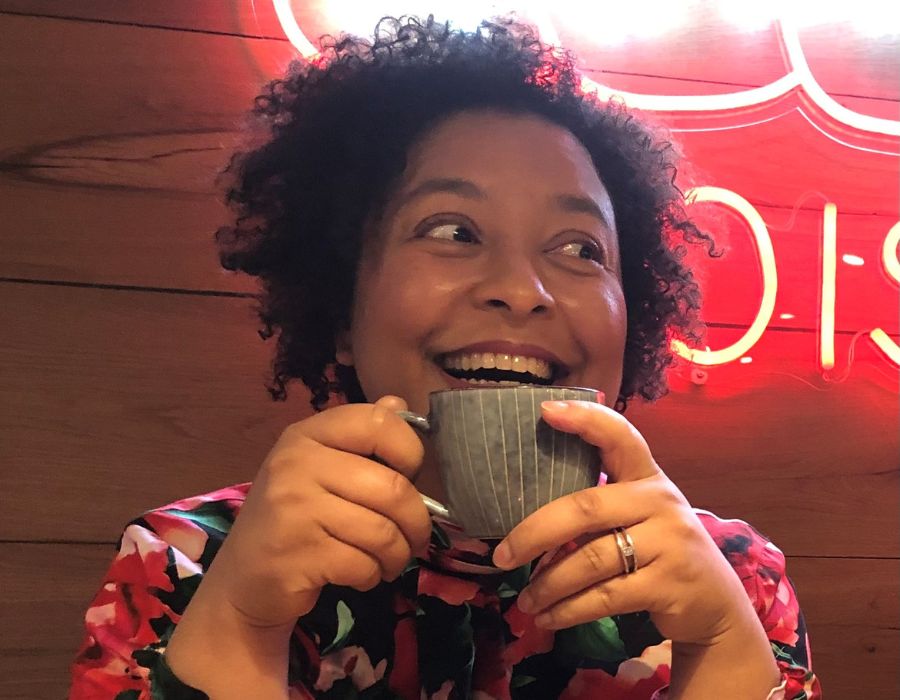
I’ve lived with my partner and child in our apartment block for eleven years. All this time, I’ve greeted our neighbors — even if it’s just been a quick smile or nod. Today, as I came home with our dog, one neighbour stopped me and said: “Du som alltid hälsar på mig, jag vet vad din man heter, jag vet vad din dotter och hund heter, men jag vet inte vad du heter.”
I told her my name and she smiled: “Nästan som mitt namn. Trevligt.” It was such a small thing, but it really warmed my heart. After so many years, to be seen as me. I’ve sometimes felt invisible in this community, but I’ve kept showing up, saying hi, staying open.
I’m a ceramicist, working full-time with clay — shaping, firing and glazing pieces that reflect inner landscapes and quiet stories. But it wasn’t an easy road to get here. Before I began working with clay, I had a job in an office where I was the only woman. I was only greeted when I greeted first, included in one-onone conversations but ignored in groups.
After clearing a two-year backlog and keeping up with daily work, I received no acknowledgement from my manager. It wasn’t until a trip to the company’s HQ in Holland that someone recognized the effort and said thank you. When I was diagnosed with burn-out and depression, that company let me go, citing that the office support was being moved to Finland.
The depression didn’t start overnight. It built slowly, over several years of challenges in a new country — a premature birth and neonatal complications, postnatal depression, pushing myself too hard to fit in and the deep loneliness that often followed.
I threw myself into learning Swedish: attending Swedish language classes throughout pregnancy (even through foglossning) and directly after mammaledighet. I read only Swedish books, listened to Swedish radio, watched Swedish TV, went to theatre in Swedish. I truly loved learning — but it was also my way of trying to belong.
Then came deeper losses: the loss of a child, the loss of my job and later my father’s passing. My body and mind could no longer keep up. Everything I had been holding together — the effort to belong, the performance of being “okay,” the unprocessed grief — collapsed into exhaustion.
Openness has always been a part of who I am. My parents were transparent about my father’s mental health, so I learned early that struggles have names, histories and plans for care. But being open in a culture where people seemed uncomfortable talking about their struggles often left me feeling out of place. My openness, which had always connected me to others, now seemed to create distance.
As an immigrant, that isolation felt sharper, and at times, deeply painful. There were moments when I felt ashamed of needing help — as if my struggles were a personal failure rather than a human one. That shame kept me quiet at first. But slowly, I learned that honesty was not my weakness; it was my bridge. Recovery began when I allowed myself to follow my heart.
I started creating with clay, attending a rehab center for burn-out and depression in Solna, practicing meditation and Kundalini yoga, journaling and working closely with a sensitive doctor who helped me find medication that truly supported me. These practices, together with time, patience and self-compassion, helped me rebuild. After nearly ten years, I was able to step off medication.
That, for me, marked not just recovery, but a kind of quiet rebirth. I could finally feel again — the texture of life, the simple beauty of being present.
Looking back, I can see how much small acts of friendliness and acknowledgement matter. Being seen in ordinary ways — not with special treatment, just simple human connection — quietly supports well-being and reminds us that we belong. I noticed this contrast most clearly when I travelled home or to places where people are naturally more open and engaged. My depression always felt lighter there, more manageable. Even during winter months abroad, I could come up for air. In Sweden, where social interactions are more reserved, I’ve often felt that friendliness can be mistaken for intrusion. But after many years here, I’ve also seen change.
I remember a time when my greetings went unanswered — when people would look away rather than meet my eyes. Then, after the Me Too and Black Lives Matter movements, something shifted. People began acknowledging me more. Some even greeted me first. It may sound small, but it meant so much. Being greeted, being seen, being acknowledged — these are tiny acts of inclusion. They say: You exist. I see you. For someone struggling with depression, that simple exchange can ease the weight of invisibility.
Today, when my neighbor said she knew my family but not me, it touched something deep. Her curiosity, her warmth — it made me feel recognized as a person, not just as someone’s mother, partner or dogwalker. I think often about how easily we underestimate the power of these small gestures. They cost nothing, yet they can change someone’s day — sometimes even their life.
Connection doesn’t always come through grand gestures or deep conversations. It often grows quietly, through everyday encounters that remind us we are part of a shared world. There’s a kind of healing in those moments — not the loud, dramatic kind, but the gentle one that seeps in through kindness, acknowledgment and shared presence.
For me, that neighbor’s comment wasn’t just a greeting. It was a reminder that connection is possible, even in places where it takes time to grow. And maybe that’s what recovery really is: finding our way back to life, one small hello at a time.
Text: Alicia
Publicerad:
Din berättelse kan skapa igenkänning hos någon annan. Vi tar gärna emot den!
Mind möter / Ensamhet / Ungas psykiska hälsa
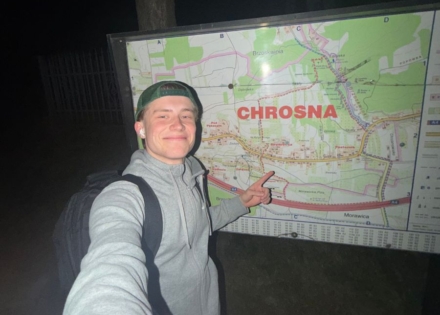
Theo Milos bestämde sig för att vandra från Kraków till Auschwitz-Birkenau, över 60 kilometer, och…
Min berättelse / Ensamhet / Hopplöshet / Mobbning / Sorg
Efter flytten till Sverige blev Danjals mamma sjuk. Mamman som varit hans trygghet i livet.…
Min berättelse / Depression och nedstämdhet / Mäns psykiska hälsa / Relationer
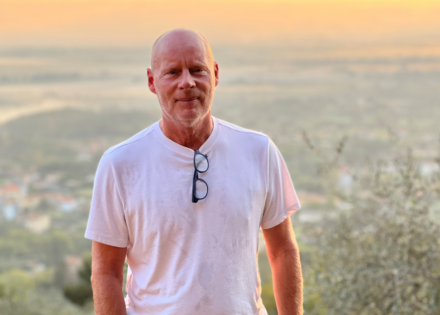
Peppe Ekmark drivs av att få andra människor att må bra, och tror på att…